Fleeting musings on a most peculiar music; music for a doomed Mamucium.
Joshua Ben Joseph provides us with these ‘Sketchy Impressions’ of Robert Paul Corless’s latest work. It is a raw, literate, and deeply personal dispatch from the ‘silent hill’—a perspective that finds the beauty in the gloom of a doomed Mamucium.
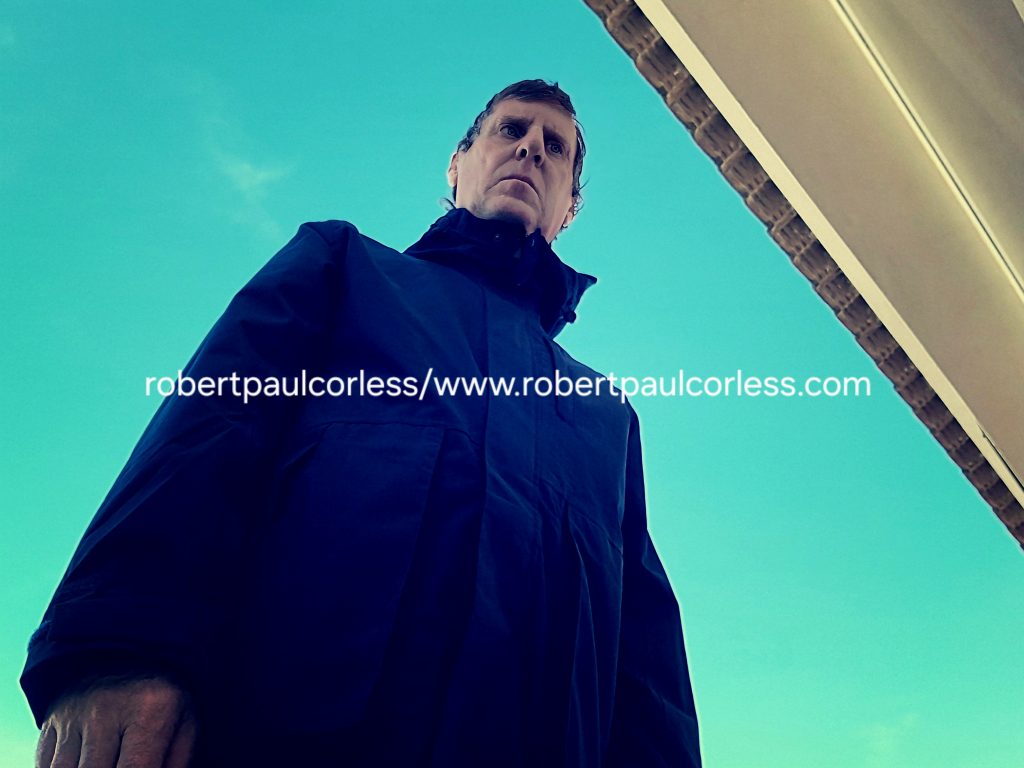
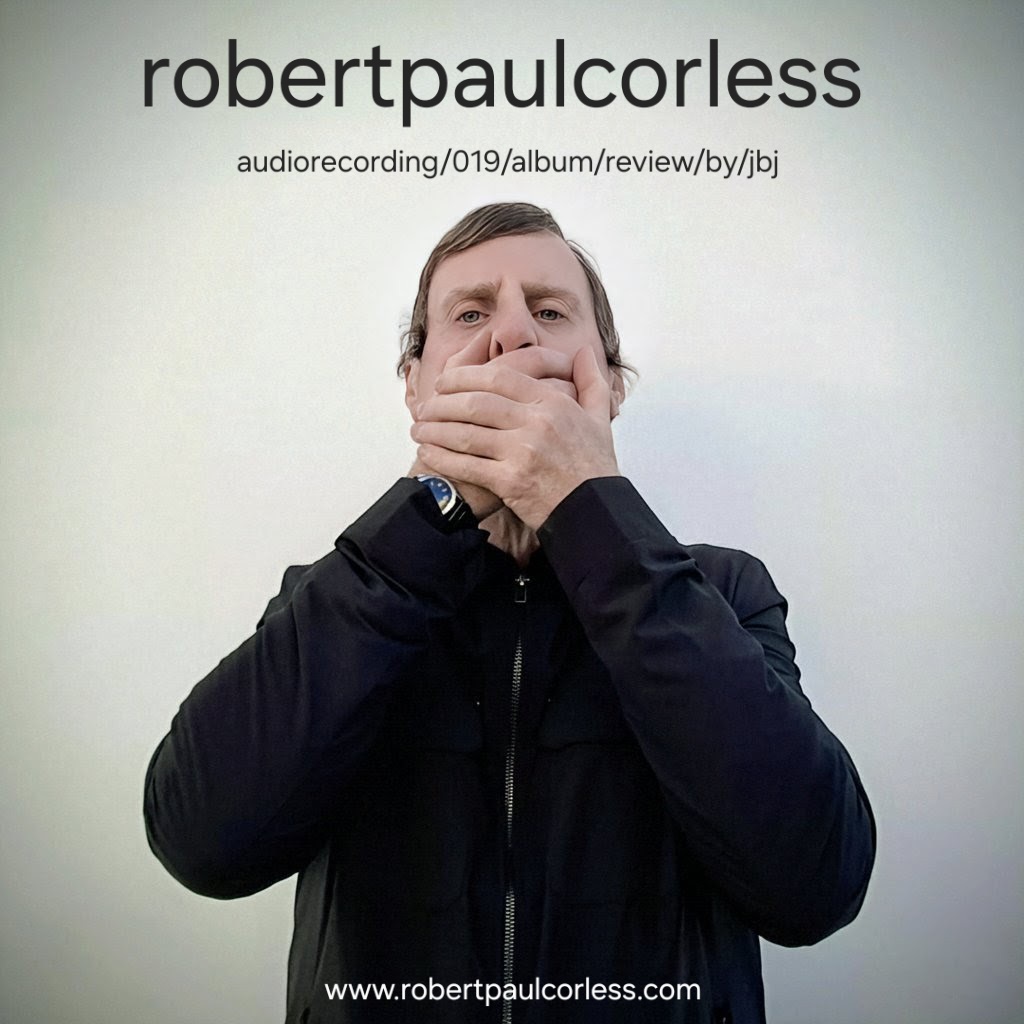
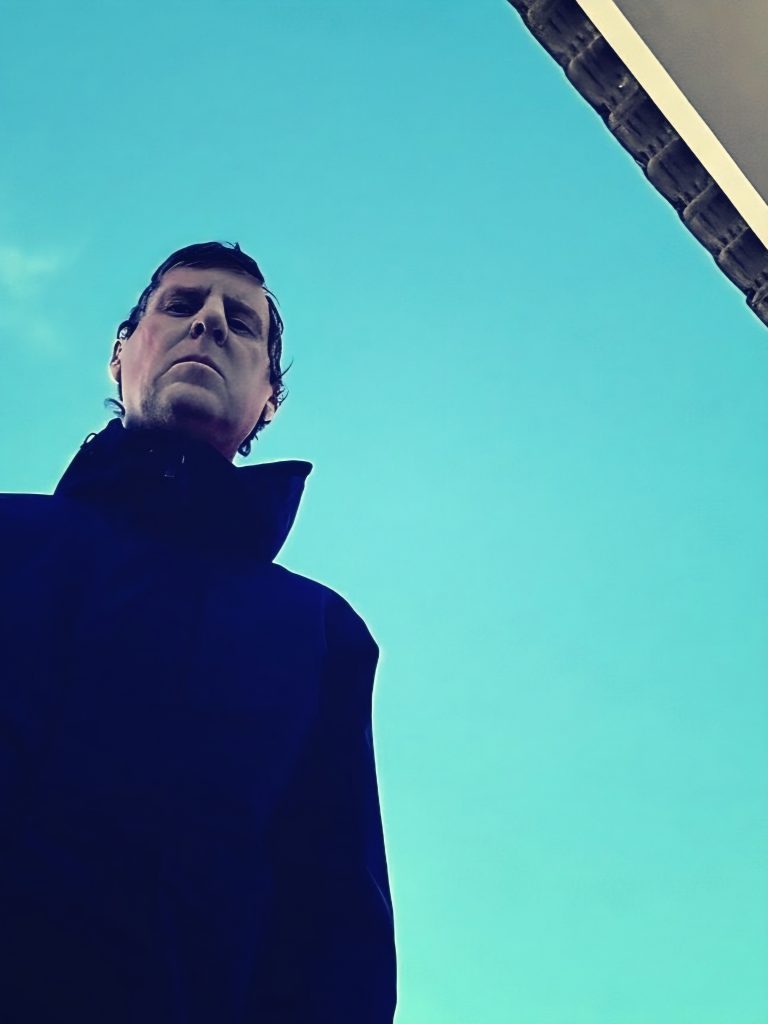
Photographs by Paul Kever Burbeary.
Words by Joshua Ben Joseph.
The ballad of a breast-like hill, lost in time, neither in nor out of the known universe. An ill wind whistling the Tit City Blues.
Track 1: ‘Full of it.’
Like writing upon a blank page silently recited by some mute poet, set to the tune you heard hummed by that dumb waitress one flip dark chill winter night in the snug of the Korova Milkbar.
Smeck at your peril, thou bastards with no manners!
Track 2: ‘Turned Upside Down.’
A slow dawning after the final nightfall.
A drear plaint for us dregs at the End of Days.
A dark reminder of how sorrowful it is to be alive & dying in this Tragic Dawn.
A light reminder of that famous quote from Finnegans Wake one sometimes sees on sympathy cards: “They lived and laughed and loved and left.”
Time, gentlemen, please!
Track 3: ‘All the Cost.’
It isn’t easy to assess the all-in cost incurred by the creative compulsive from the cradle of his first creation to the grave of his last failure. For the cost is not so much to his purse as to his personhood. It is said that artistic talent is a gift. Unasked-for & often unwanted, but a gift nonetheless. Yet the price the gifted artist must pay for the upkeep of this cruel-eyed child from conception to cremation will likely be great. Maybe better to buy a baby coffin at the beginning and abandon all responsibility.
No. The curse of creative compulsion is that it isn’t a choice, it’s an order. A summons. A sentence.
Track 4: ‘It’s Okay I will still be waiting.’
Music for the Last Watch of Hero.
Music for the Song of Songs.
“I sought thee on the morrow, and never found thee there.”
This is the sweetest piece in the collection.
And the saddest.
A dark reminder of the death of my wife. Parting, without a sequel. The bitterest sorrow.
A light reminder of Cecily’s promise to Algernon in the Importance of Being Ernest:
”If you are not too long, I will wait here for you all my life”.
Track 5: ‘Perhaps One Day Soon.’
Meaning perhaps not.
But is the title a malign threat or a benign promise? The mood of the music is ominous & funereal. Grimly hymnal. I hear hope slowly sinking into hopelessness. A contemplation of suicide perhaps. Meaning perhaps not.
But writing as one currently under threat of execution from a slowly approaching malignant entity it seems soothing to sink whilst bathing in the cool morbidity of this melody. They say drowning is the gentlest death.
Track 6: ‘It’s What You Don’t Say That Gives You Away.’
“Meanwhile on Beasley Street, silence is the code” as an old friend of RPC’s, the Poet Laughalot John Cooper Clarke, coldly droned in his one poem of genius, the feverish ‘Beasley Street.’
Silence is the code in the work & world of RPC too. He seems much addicted to silence. The man has something of the Trappist monk about him. There is a deathly silence underscoring his music. And in his life he has a horror of ‘chiselers,’ those slang-babbling swindlers, tricksters and petty crooks who for some reason appear to have been his lot in life. Unsurprising I suppose as Robert hails from Manchester, a city of industrial-scale chiselers, whose erratic chatter still rattles around his skull, long after he has fled their ‘mithering’ grip. ‘Mither’ being another of Robert’s buzzwords & bugbears. “No Mither!”
Mither is to be avoided at all costs.
I fear there is a peculiar form of Mancunian PTSD at play here, as RPC continues to transpose the skull-chiselling chatter of his native city’s grifters into instrumental music, in the safe haven of his hermitage-cum-studio in the Spanish hills.
But it’s what you don’t say that gives you away, and I note that he has thus far scrupulously avoided learning too much of his adopted country’s language, except for the smattering of Spanish he needs to get by. Could it be that he is exercising his right to remain silent, afeared of falling prey to a new set of mithering Spanish chiselers?
A very shrewd move maybe.
Language is a dangerous game and there are no safe words.
As many a dead sexual masochist learned too late when the agreed upon safe word suddenly stopped working: there are no safe words.
Track 7: ‘Calcified signal.’
An experiment in melancholic Retrofuturism.
I cannot conceive of this in any other way.
But it fucking rocks! (In its fashion.)
Track 8: ‘For Whose Sake?’
A question that any pale poetic musical artist might ask himself when he’s 69 albums deep and weaving away at his loom of dreams on some wild Calvaric hill in his Christly woodshed in the wilderness.
For his answer he might look to a Hebrew prophet of the Old Testament:
“For my own sake, for my own sake, I did this.”
-Isaiah 48:11(Written in salutation to my friend Robert Paul Corless; a solitary, a songster, a sound sculptor; always in my mind’s eye on his silent hill a million miles from Manchester, poetically chiselling his songs without words.)